

Google LLC
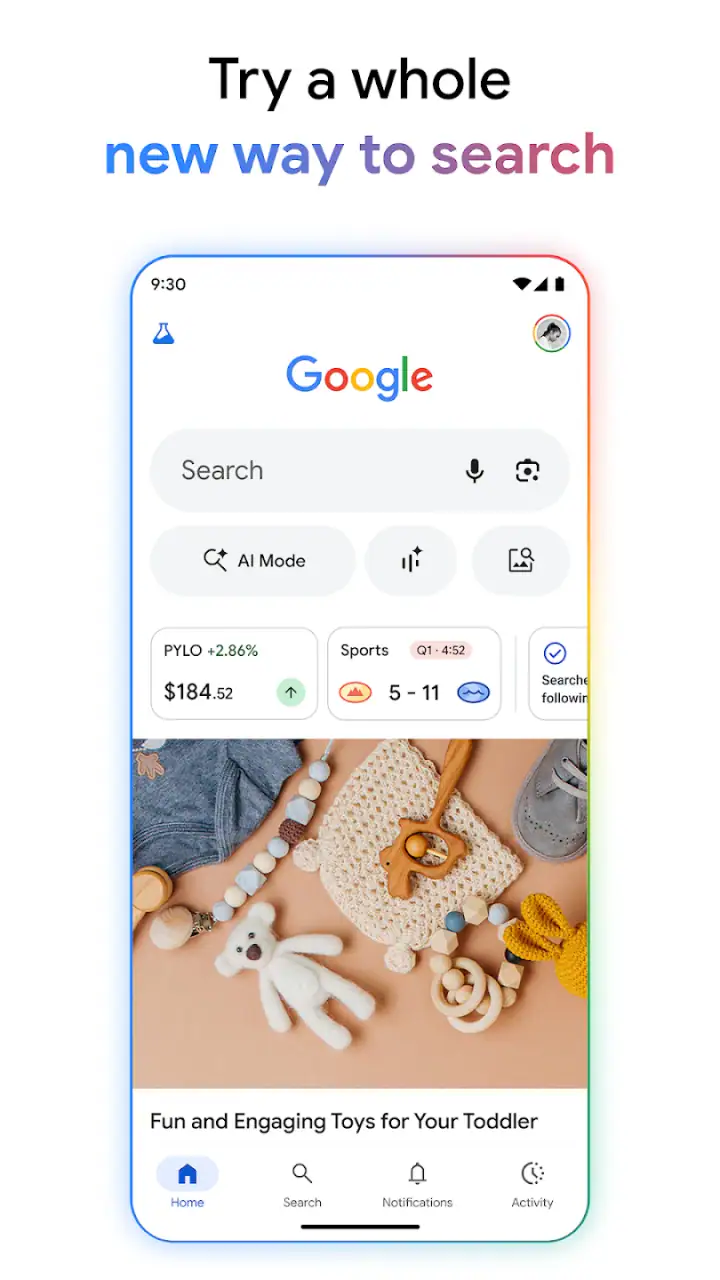
I use Google as a daily starting point rather than treating it as a special-purpose tool. It is the familiar search app from Google LLC, available free of charge and rated for Everyone. On my phone, it is most useful when I need an answer quickly, want to find a nearby place, or need to move from a vague question to a useful source without opening a browser first.
That simplicity is also the reason it is easy to underestimate. The app is not just a blank search box. It brings together web search, voice input, visual lookup, personalized discovery, and shortcuts into one mobile interface. My experience has been that it feels fastest when I use it for a focused question, while broader searches require more judgment because the first results are not automatically the best answer.
How Google feels during everyday searches
The app has been available since August 12, 2010, and its scale is hard to ignore: it has passed ten billion installs and collected an average rating of 4.1 from roughly twenty-nine million ratings. Those figures suggest broad familiarity, but they do not guarantee that every search experience will suit every person. I still find the app most valuable when I know what I am trying to discover, even if I do not yet know the exact words to use.
Related News

For a simple request such as checking a definition, comparing two everyday products, finding a recipe idea, or locating an official page, results usually appear with little effort. The practical advantage is not merely speed. It is the ability to refine a search immediately. I can start with a general phrase, notice which terms appear in useful results, and then add a location, date, model name, or specific problem to narrow the next attempt.
The best speed improvement comes from asking a better second question. When the first search is too broad, I avoid scrolling endlessly. Instead, I add the missing detail. For example, a search about a phone problem becomes more useful when I include the exact model and the wording of the error. This approach saves more time than expecting the app to understand an imprecise request perfectly.
Related News

Why WhatsApp Messenger Still Makes Everyday Communication Feel Easy

Jurassic World: The Game Is the Better Dino Tycoon for Strategic Players

Threads in Real Life: Who Should Join, Lurk, or Leave

How SHEIN Turned Shopping Into an Endless Content Feed

How to Make Fortnite Feel Smarter on Mobile

Should You Switch to Microsoft Outlook on Mobile?
Voice search is particularly convenient when my hands are busy or when a long phrase would be irritating to type. It works well for natural questions, but I still check the wording before trusting the results. Names, unfamiliar places, and technical terms can be interpreted differently from what I intended. I treat voice input as a quick first draft, not as a guarantee that the query was captured correctly.
Visual search adds another useful route. When I cannot name an object, identify a plant, or describe a product clearly, using an image can be more practical than guessing keywords. The trade-off is that visual results need careful checking. A similar-looking item can lead to a confident but irrelevant answer, so I compare several results and look for a source that explains why the identification makes sense.
What happens when searches become demanding
Light searches are only part of my use. I also turn to Google when planning a trip, researching a purchase, checking a repair idea, or gathering background for a personal project. These heavier moments are less about the app struggling to open and more about the amount of information it presents. A fast result page can still create extra work if it contains advertisements, repeated summaries, shopping pages, videos, forums, and outdated advice all competing for attention.
Gallery
For research, I use a staged workflow. First I search broadly to learn the vocabulary of the subject. Then I search those newly discovered terms with a more specific purpose. Finally, I open the original sources rather than relying only on snippets. This is one of the most important habits with this app because a concise preview can omit conditions, exceptions, or the date of the information.
When I compare products, I do not stop at the shopping-style results. I look for the manufacturer’s specifications, independent testing, user manuals, and discussions that reveal recurring problems. Google is excellent at helping me find these different viewpoints, but it does not remove the need to judge them. The app reduces the time spent locating information; it does not turn every result into trustworthy advice.
A realistic example is preparing for a weekend away. I might search for the destination, check opening hours, look up transport options, and find a weather forecast. In that situation, the app is useful because each search leads naturally to the next. However, I still open the relevant service directly before leaving, since hours and travel conditions can change. Search is a convenient route to current information, not a substitute for checking the source at the moment it matters.
Long sessions also expose a limitation: the app can encourage constant switching between topics. I may begin with one question and end up opening unrelated results, videos, or news. That is not a technical failure, but it affects productivity. If I am researching something important, I save the useful pages or write down the key terms instead of trusting that I will find the same path again later.
Stability, recovery, and trust in the results
In ordinary use, I experience Google as a stable tool. Its main job is clear, and I rarely need to learn a complicated interface before searching. When a result is poor, the quickest recovery is usually to change the wording, add context, or search for the answer from a different angle. That recovery process is more dependable than repeatedly refreshing the same vague query.
Search quality can vary with the subject. Popular topics often produce many results, but abundance can make it harder to identify the most useful page. Very local questions, obscure technical problems, or rapidly changing events may require several searches. I also pay attention to whether a page is an original source or simply repeating information from elsewhere.
For sensitive decisions, I use Google as an information-finding aid rather than a final authority. Health, legal, financial, and safety-related questions deserve direct professional or official sources. The app can help me discover the right terminology and locate those sources, but a polished result page should not be mistaken for personal advice.
Recovery is strongest when I remember what the app is designed to do. If I need a full document workflow, a dedicated map interface, or a specialist shopping comparison, I may be better served by opening that service directly. Google can point me there, but an all-purpose search screen is not always the most efficient place to finish the task.
Another practical point is account personalization. Results can feel more relevant when the app understands my usual interests or location, yet that relevance can also narrow what I notice. For an unbiased comparison, I deliberately vary my wording and inspect several sources. A personalized result is convenient, but convenience and completeness are not the same thing.
Resource demands and device limitations
Google is generally a sensible fit for modern Android and iOS phones, especially for people who want one familiar search tool. The main constraint is not that searching is unusually demanding; it is that richer activities can involve images, voice, visual lookup, maps, videos, and multiple opened pages. On an older or tightly managed device, those extra steps may feel less comfortable than a simple browser search.
I also consider the quality of the connection. A text query is easier to use when connectivity is limited than an image-heavy result page or a search that leads into video and map content. If I am travelling, I try to find important addresses, confirmations, and instructions before I need them. That small preparation reduces dependence on a perfect connection during the actual journey.
Screen size changes the experience as well. On a compact phone, result pages can feel crowded when several types of content appear together. A larger display makes comparison easier, but it can also make it tempting to open too many sources at once. I find the app most manageable when I decide whether I need a quick answer or deeper research before I start opening results.
People who want a minimal, private-feeling search routine may prefer a more focused alternative. A dedicated browser can provide a clearer separation between searching and browsing. Specialist apps can be better for maps, shopping, academic research, or news because they organize one kind of information more deeply. I would not choose Google as my only tool for every category simply because it can reach many categories.
It is also not the ideal choice for someone who dislikes personalized discovery or wants complete control over the sources shown first. In that case, a search engine with a different approach to presentation may feel more comfortable. Google’s strength is breadth and convenience; its weakness is that the user must actively filter what appears.
Useful habits that make the app better
One habit I recommend is searching for the problem and the evidence separately. If I want to know whether a product is reliable, my first query might identify its specifications, while the next looks for the manual, warranty information, or long-term reports. Separating those goals prevents a single promotional page from becoming the foundation of my decision.
A second habit is using exact phrases when troubleshooting. Error messages, model numbers, and distinctive wording often produce much better results when kept together. I avoid adding unnecessary words that might hide the important phrase. If the results are too narrow, I remove one detail at a time rather than rewriting the whole query.
A third is checking dates in context. A page can rank well because it is widely referenced, not because it is current for my situation. This matters for software instructions, opening hours, travel information, prices, and changing rules. I use the search results to locate the page, then inspect the page itself for the details that affect my decision.
For visual searches, I crop the image when possible so the app focuses on the relevant object instead of the entire scene. I then compare the suggested matches with visible details such as shape, labeling, color, or material. This is a more reliable workflow than accepting the first visual suggestion without checking it.
When I use voice input in public, I keep the question short and review the transcription. A small recognition error can change the subject completely, especially with names and place names. Correcting the query immediately is easier than trying to interpret a result page built on words I never intended to say.
These habits show the real character of the app. It is not a magic answer machine, and its performance should not be judged only by how quickly it displays results. Its value comes from helping me move through uncertainty: form a question, inspect possibilities, refine the language, and reach a source that deserves attention.
Who should use it, and who should look elsewhere?
I would recommend Google to anyone who wants a free, familiar tool for everyday discovery on Android or iOS. It suits students looking for starting points, travelers checking practical details, families settling quick questions, and users who prefer voice or image input over typing everything. Its huge reach also means that unusual questions often have at least some useful path forward.
I would be more cautious about recommending it as the sole research environment. Professionals who need structured databases, citation tools, specialist archives, or tightly controlled source selection will probably work better with dedicated services. Likewise, someone who wants a distraction-free reading workflow may prefer a browser setup with fewer discovery features.
Parents should also remember that an Everyone rating describes broad suitability, not that every search result is appropriate for every child. Search results reflect the open web, so supervision and sensible search habits still matter. For younger users, I would focus on teaching them how to recognize official sources and question sensational results rather than presenting the app as an automatic filter.
Compared with typing a web address into a browser, Google is quicker when I do not know where the answer lives. Compared with specialist apps, it is broader but usually less focused. Compared with asking another person, it is immediate and searchable but lacks human context. That balance explains why I keep it installed while still switching to other tools when the task becomes specialized.
My performance verdict
Google remains a strong everyday search app because it combines quick entry, multiple ways to ask a question, and access to an enormous range of information. In my experience, its perceived speed is best when the request is focused and the connection is steady. Its stability is less about never encountering a poor result and more about recovering quickly through better wording and source checking.
The main cost is attention. Rich result pages can lead me away from the original task, and a large choice of answers can demand more judgment than a simple question seems to deserve. The app also cannot guarantee that the most visible result is the most accurate, current, or suitable one. Those are meaningful limitations, especially for serious decisions.
Still, I find the free app worth keeping for everyday searches, voice questions, visual lookups, and the first stage of research. It is most effective when I treat it as a fast directory and thinking aid, then verify important details at their source. If you want convenience without giving up your own judgment, this is a practical tool; if you want a tightly curated specialist experience, choose a dedicated alternative instead.
Google is developed by Google LLC, carries an Everyone content rating, and has become one of the most widely used tools on mobile devices. My final view is positive but measured: it earns its place through breadth, speed, and easy recovery, not because every result is perfect. Used with specific queries, careful source checks, and a willingness to switch tools when appropriate, it can make everyday information hunting noticeably easier.
FAQs for Google
What is Google and what are its main features?
Google is a comprehensive search engine that offers various services beyond basic search capabilities. Its main features include Google Search, Google Maps, Gmail, Google Drive, and Google Photos. These services enable users to find information, navigate, communicate, store files, and manage photos, making it an indispensable tool for both personal and professional use.
How does Google ensure the privacy and security of user data?
Google implements robust security measures to protect user data, including encryption, two-factor authentication, and regular security updates. The company also provides users with privacy controls to manage their data, such as viewing and deleting search history, managing ad preferences, and setting account security alerts. Transparency reports are also available for users to understand data usage.
Is Google available on both Android and iOS platforms?
Yes, Google is available on both Android and iOS platforms. Users can access Google services through the Google app, which is downloadable from the Google Play Store for Android devices and the Apple App Store for iOS devices. Both versions offer similar features, ensuring a consistent experience across platforms.
Are there any costs associated with using Google services?
Most Google services are free to use, including Google Search, Gmail, and Google Maps. However, there are premium services such as Google One, which offers additional storage and other benefits for a monthly fee. Users can choose to pay for extra storage or other premium features based on their needs.
How does Google integrate with other apps and services?
Google integrates seamlessly with various apps and services, allowing users to sync data across devices and platforms. This includes integration with productivity tools like Google Workspace, third-party apps through APIs, and smart home devices. These integrations help enhance user experience by providing a unified ecosystem for managing tasks, data, and communications.
Pros
- User-friendly interface with intuitive design.
- Seamless integration with other Google services.
- Extensive search capabilities and filters.
- Regular updates with new features and improvements.
- Access to vast amounts of information quickly.
Cons
- Privacy concerns with data tracking practices.
- Can consume a lot of mobile data.
- Occasional glitches in voice recognition.
- Ad-heavy experience can be distracting.
- Limited offline functionality without downloads.


